Core product
Programmatic Intelligence
Programmatic media with behavioral insight
Programmatic driven by signals, not just inventory.
Talk to NodalThe problem
Much of programmatic media still buys reach: cheap impressions for broad audiences, hoping that volume makes up for the lack of precision. The result is budget spent on people who showed no buying behavior at all. In practice, you pay to be seen by people who were not looking.
How it works
We use AI to combine context, behavior and data to decide where to buy media, for whom and when, with decisions that go beyond audience and CPM.
01
Signal collection
Events from your website, top-of-funnel media and new channels go into the same base. In practice: one history per audience, not one per channel.
02
Reading behavior
Models classify intent patterns based on what people do, not on who they are. In practice: segments that change as behavior changes.
03
Buying decision
Bid, inventory and creative are chosen by signal, at auction time. In practice: the budget follows intent, not impressions.
04
Continuous adjustment
The result of each cycle comes back in as signal and adjusts the next decision. In practice: the campaign changes during the week, not only in the monthly report.
What you get
Deliverables
- Signal-based media plan
- Named behavioral segments
- Creatives by segment
- Incrementality reading
Reporting rhythm
- Dashboard updated daily
- Weekly review with the team
- Exportable monthly report
In the dashboard
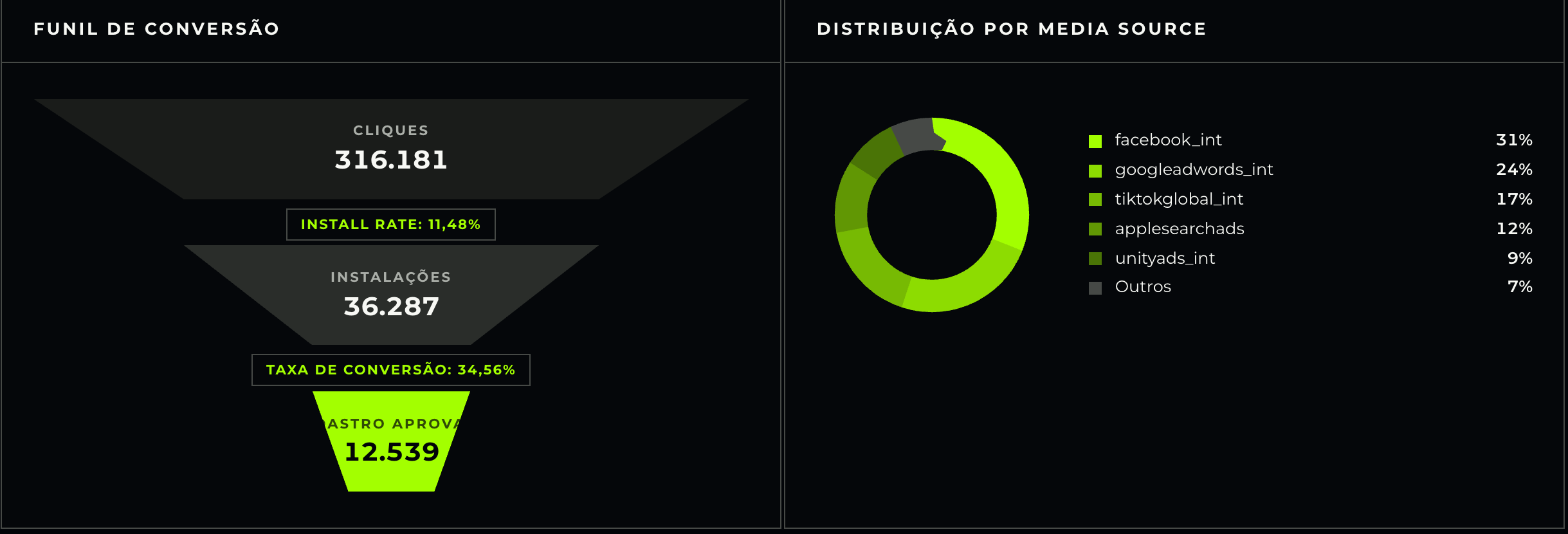
Signal by segment, cost per behavior, attribution by stage.
When it fits, when it does not
When it is the right choice
- You already have traffic and measurable events on your website or app.
- There is budget for mid-funnel media, not only for branded search.
- The team accepts that the campaign may change course within the week.
When it does not fit
- There is no defined conversion event, or it cannot be measured.
- Traffic volume is too small to generate signal within a few weeks.
- The only goal is to cut media costs, with no intention of moving up the funnel.
If your case is the second one, start with Behavioral Retargeting. If it is the third, we are probably not the right choice right now.
Proof
89%
viewability at the top of the funnel. Women's lingerie e-commerce, 6 months of operation.
Also in
84%
average viewability rate at the top of the funnel, against a market average of around 55%. Amusement park, 12 months of operation.
In the system
Receives from
This page
Programmatic Intelligence
Delivers to
Frequently asked questions
How is attribution done?
By stage of the journey, not by last click. Each conversion is read against the signals that came before it, and the weight of each channel shows up in the dashboard. In practice, you see how much the top contributed to the bottom.
What data is used and how long is it kept?
Behavioral data, not identity data: website and app events, plus media impressions and cost. The Tag does not collect names, emails or ID numbers, and the audience is recognized through pseudonymized identifiers, with consent before any collection. Retention follows the period set by each advertiser, and data is deleted on request.
Do I need to change my measurement stack?
No. If the platform you use exposes an API or exports events, Nodal connects to it. Measurement, MMP and e-commerce feed into the same data model, with no stack migration.
What is the commercial model?
We work with CPA, Rev Share, CPL and CPM. The model is agreed with the client according to the goal of the operation, and can combine more than one format in the same contract.
Contact
Talk to Nodal about Programmatic Intelligence.
We are made of AI and data, but we believe in human service. Someone from our sales team will get in touch as soon as possible, with an initial reading of your case.